
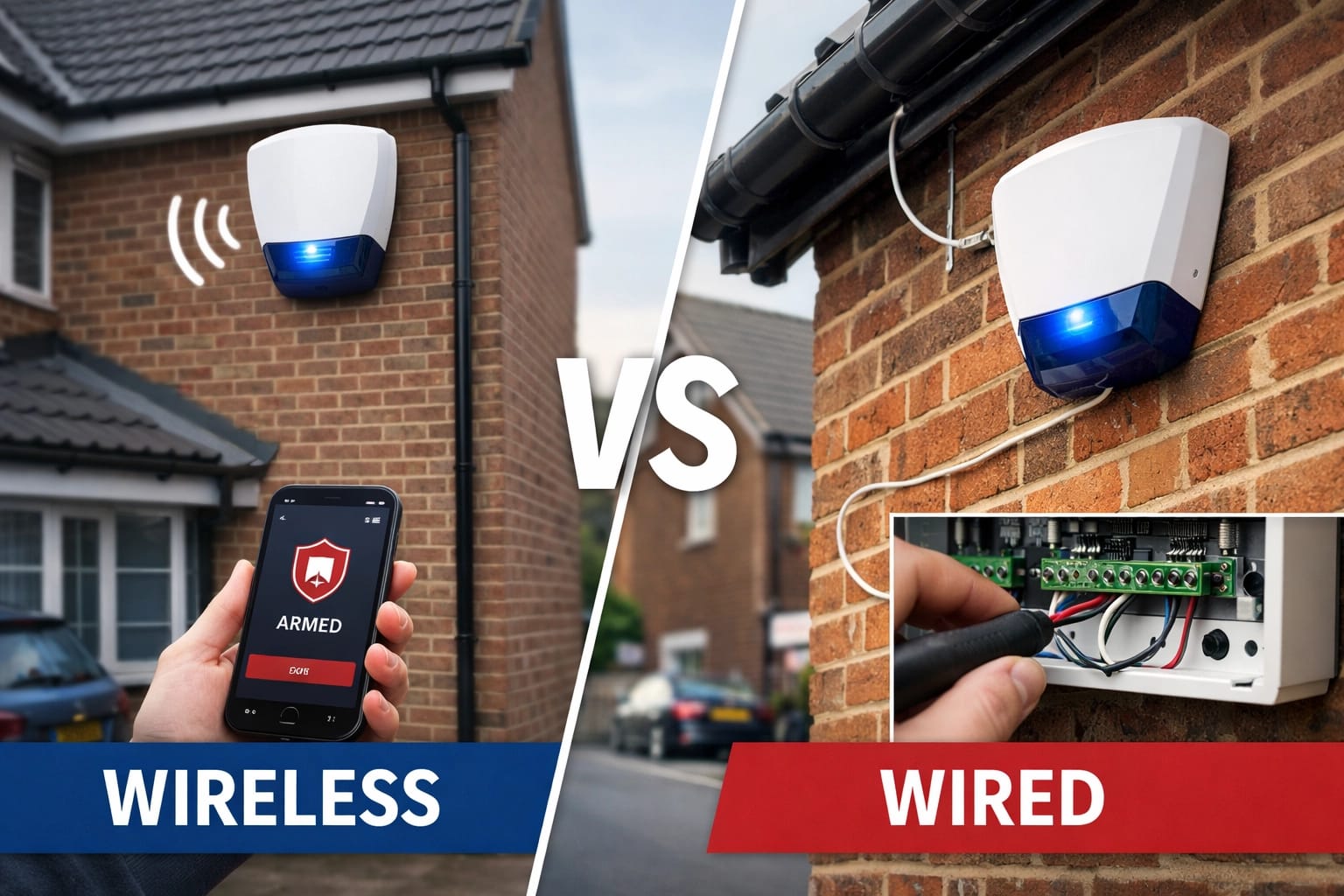
Choosing the right security system for your home or business in the South West isn’t just about picking a box off a shelf; it’s about finding the perfect balance between technology, aesthetics, and long-term reliability. At i-Spy CCTV, we get asked the same question almost daily: "Kevin, should I go wireless or stay wired?"
The truth is, there isn't a "one size fits all" answer. Whether you’re protecting a cozy terrace in Bristol, a sprawling farmhouse in Cirencester, or a bustling retail unit in Gloucester, the right choice depends on your specific needs. Both systems have evolved massively over the last few years, and as professional installers, we work with both every single day.
In this guide, we’re going to break down the pros and cons of wireless and wired intruder alarms so you can make an informed decision and achieve that all-important peace of mind.
The Great Security Debate: Wired or Wireless?
Back in the day, "wireless" was often a dirty word in the security industry. Early systems were prone to interference and battery issues. However, those days are long gone. Modern wireless tech: like the Ajax systems we frequently install: is incredibly robust. On the flip side, wired systems remain the gold standard for many commercial applications and permanent residential setups.
Before we dive into the details, remember that whether you choose wired or wireless, the goal is the same: unparalleled protection for your loved ones and your assets.
Going Wireless: The Modern, Flexible Choice
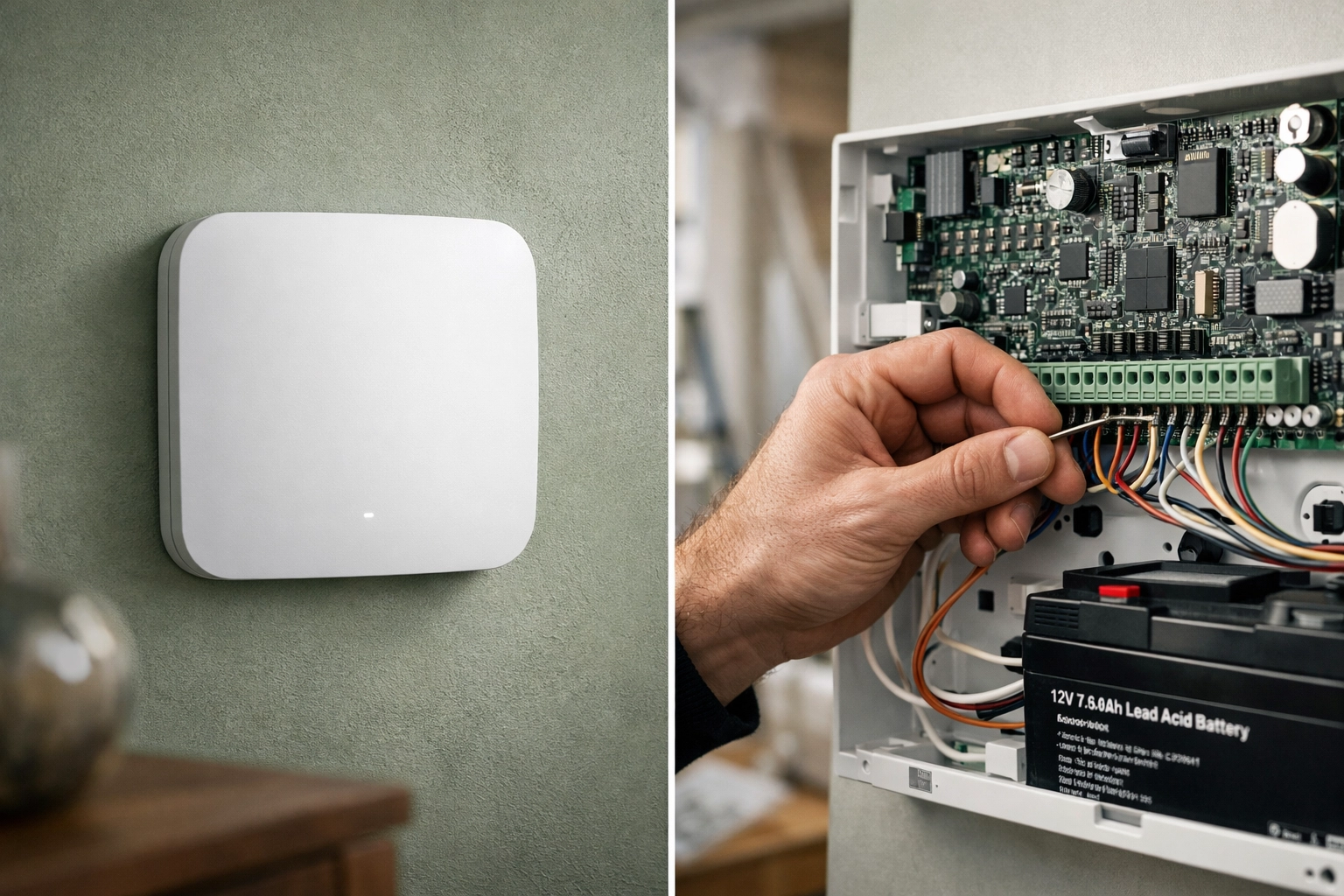
Wireless intruder alarms have taken the residential market by storm, and for good reason. These systems use secure radio frequencies to communicate between sensors, sirens, and the main control hub.
Why Homeowners Love Wireless Systems (Like Ajax)
If you’re looking for a seamless installation that doesn't involve lifting floorboards or drilling through every wall in your house, wireless is likely your best bet.
- Meticulous Installation with Zero Mess: Because there are no cables to run, we can have a wireless system up and running in a fraction of the time. This makes it the ideal choice for decorated homes where you don't want to see a single wire.
- Cutting-Edge Smart Integration: Most wireless systems are built for the modern age. You can control everything from a sleek smartphone app, receiving instant notifications if an alarm is triggered.
- Easy to Expand: Want to add a sensor to the new garden shed or the conservatory next year? With wireless, it’s a simple "plug and play" process.
- Portability: If you move house, you can technically take your investment with you (though we’d always recommend a professional decommission and reinstall).
At i-Spy CCTV, we are big fans of Ajax. It’s a bespoke solution that looks as good as it performs. It’s sleek, it’s fast, and it’s incredibly reliable. If you’re curious about how these look in action, check out our best alarm systems for Bristol homes guide.
The Trade-offs of Wireless
While wireless is fantastic, it isn’t perfect. The main consideration is maintenance. Because every sensor is battery-powered, those batteries will eventually need replacing (usually every 2 to 5 years). Also, in very large buildings with thick stone walls (common in some of our older Bath or Cirencester properties), signal range can occasionally be a challenge, though signal boosters usually solve this.
The Wired Advantage: Reliability and Longevity
Wired systems are the traditional workhorses of the security world. Every component is physically connected to the control panel via low-voltage cabling.
When Does a Wired System Make the Most Sense?
Wired systems are often the preferred choice for commercial installations or large-scale residential projects, especially during a renovation or new build.
- Robust Signal Reliability: There is zero chance of radio interference or signal dropping. If the wire is intact, the signal is getting through.
- Lower Long-Term Maintenance Costs: You don’t have to worry about changing batteries in a dozen different sensors every few years. Aside from an annual professional check-up, they are very "set and forget."
- Cost-Effective for Large Areas: For massive commercial warehouses or multi-story offices in Swindon or Newport, the cost of sensors can be lower for wired systems compared to high-end wireless ones.
- No Battery Fees: While wireless batteries aren't a huge expense, with a wired system, those recurring hardware costs are non-existent.
The Downside of Wired
The biggest hurdle is the installation process. It is labor-intensive. Running cables through an existing, finished home is a big job that can be disruptive. This is why we usually recommend wired systems for businesses or homeowners who are already mid-renovation.
Head-to-Head: Comparing the Two
To help you decide, let's look at how they stack up across the most important categories:
| Feature | Wireless Systems | Wired Systems |
|---|---|---|
| Installation Time | Fast (Hours) | Slow (Days) |
| Disruption | Minimal | High (Cables/Drilling) |
| Maintenance | Battery changes required | Minimal |
| Reliability | Very High (Modern systems) | Absolute |
| Smart Features | Standard / Built-in | Often requires add-ons |
| Best For | Finished homes & small offices | New builds & large commercial |
Integrating with CCTV and NVR IP Systems
Whatever alarm system you choose, it shouldn't work in isolation. The most secure homes in the South West use a layered approach. We often combine an intruder alarm with a high-definition CCTV system.
Using NVR (Network Video Recorder) IP camera systems, we can create a security ecosystem where your cameras and alarms talk to each other. For example, if your alarm is triggered, your phone can immediately show you a live feed from your cameras to see exactly what’s happening. This creates a tranquility that you just can't get from a standalone alarm.
Whether you’re looking for professional CCTV installation in Gloucester or protection for a Devon farm, integration is key.
Why Professional Installation Trumps DIY
It’s tempting to grab a DIY wireless kit from a big-box retailer, but there’s a massive difference between a "smart gadget" and a professional security system.
When you work with i-Spy CCTV, you’re getting more than just hardware. You’re getting:
- Expert Consultation: We assess your property’s weak points.
- Bespoke Design: We place sensors exactly where they’ll be most effective.
- Professional Calibration: We ensure no false alarms from pets or swaying curtains.
- Ongoing Training: We make sure you know exactly how to use your system to its full potential.
We’ve seen too many "budget" systems fail when they were needed most. Don't leave your safety to chance.

Nearby Areas We Cover
From our base, we travel across the South West and South Wales to ensure our neighbors are protected. If you’re in any of these areas, we’re your local experts:
- Bristol & Bath
- Gloucester & Cheltenham
- Swindon & Chippenham
- Oxford & Reading
- Newport, Cardiff & Swansea
- Bournemouth & Poole
- Southampton & Winchester
We also cover Banbury, Basingstoke, Bracknell, Bridgend, Cirencester, Cwmbran, Dorchester, Malmesbury, Newbury, Slough, Stratford upon Avon, Taunton, Worcester, and Yeovil.
If you want to see some of our recent work in your area, take a look at our case studies for Bristol or Bath.
Secure Your Peace of Mind Today
Choosing between wired and wireless doesn’t have to be a headache. Whether you want the sleek, high-tech flexibility of an Ajax wireless system or the rock-solid permanence of a wired commercial setup, i-Spy CCTV has the expertise to get it done right.
We believe everyone deserves to feel safe in their own home or place of business. That’s why we offer a free, no-obligation security survey to help you figure out exactly what you need. No hard sales, just honest advice from Kevin and the team.
Ready to protect what matters most?
Contact i-Spy CCTV today for your Free Security Survey
Let’s build a robust defense for your property together. Whether you're in the heart of Swindon or the rural reaches of Somerset, we're here to help you sleep soundly at night. Don't wait for a "close call" to take action( proactive protection is always the best strategy.)