
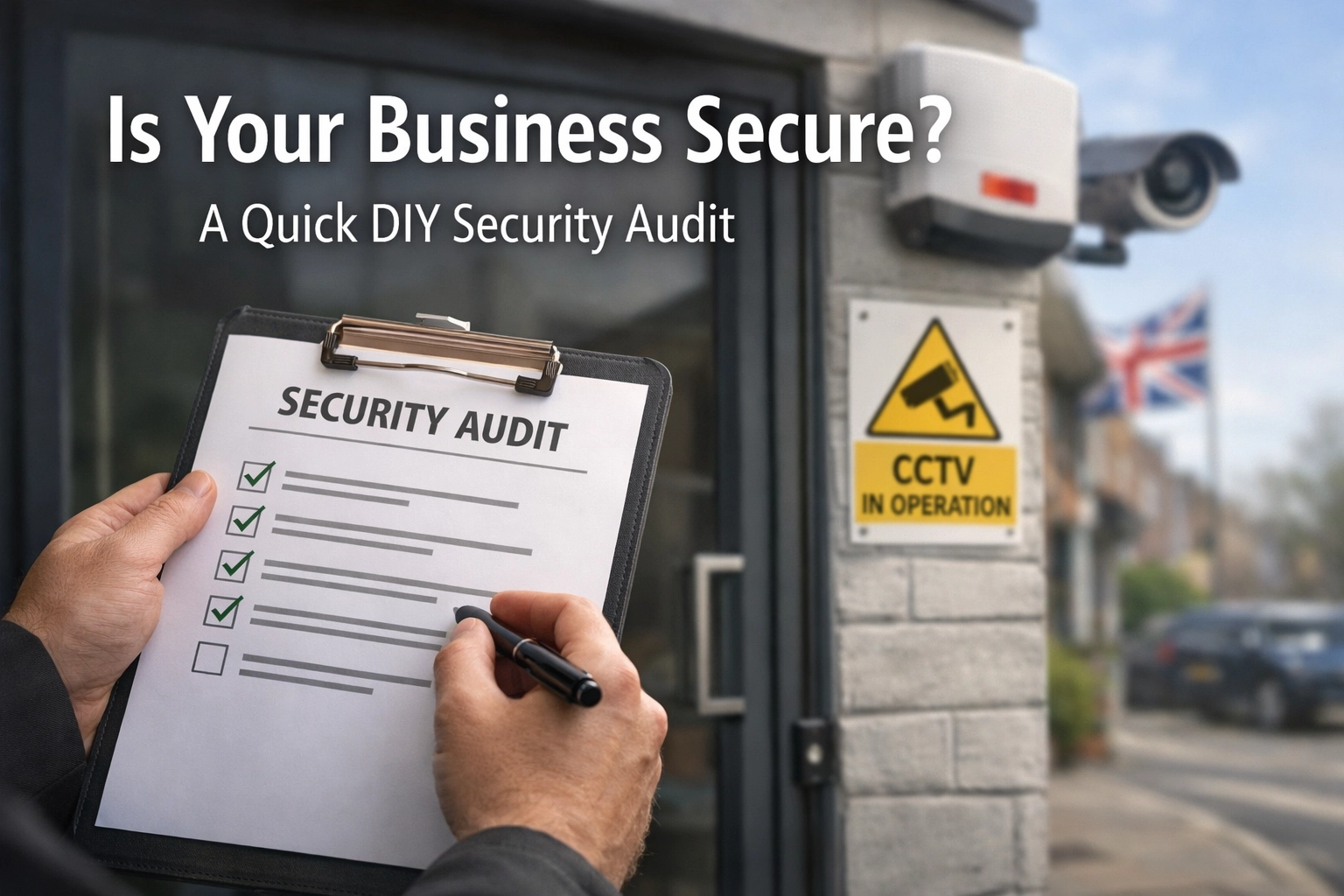
As a business owner, your "to-do" list is likely longer than a Monday morning queue at a coffee shop. Between managing staff, balancing the books, and keeping customers happy, security can sometimes slide down the priority list. However, protecting your livelihood shouldn't be a secondary thought. Whether you operate a retail unit in Cheltenham, a bustling warehouse in Gloucester, or a modern office in Bristol, ensuring your premises are a hard target for intruders is essential for your peace of mind.
At i-Spy CCTV, we believe that security starts with awareness. While nothing beats a meticulous professional survey, you can take immediate steps today to identify the low-hanging fruit that burglars look for.
This quick DIY security audit is designed to help you see your business through the eyes of an intruder. Let’s dive in and see how your current defences hold up.
Step 1: The Perimeter – Testing Your First Line of Defence
Your perimeter is more than just a boundary; it is the first opportunity to signal to a potential criminal that your business is not worth the risk. A robust physical perimeter acts as a powerful deterrent.
Doors and Entry Points
Walk around your building and physically inspect every door. Don’t just look at them: interact with them.
- Check the Frames: Is the door frame solid, or is it showing signs of rot or warping? A weak frame makes even the most expensive lock useless.
- Inspect the Hinges: Are they exposed on the outside? If so, an intruder can simply pop the pins and remove the door entirely.
- Deadbolts and Latches: Ensure all external doors are fitted with high-quality deadbolts. If you are using standard cylinder locks, consider upgrading to anti-snap versions to prevent common "lock-snapping" techniques.
- Access Control: Who has the keys? If you’ve had a high turnover of staff and haven’t changed the locks or updated your digital access codes, your security is compromised.
Windows and Glazing
Windows are often the weakest link in a commercial building's armour.
- Visible Assets: Can you see high-value equipment (like MacBooks or specialized tools) through the window from the street? If so, you’re providing a "shopping list" for thieves.
- Locking Mechanisms: Are the window locks functional? Boldly check each one to ensure they click into place and haven't been painted shut or left unlocked for ventilation and forgotten.

Step 2: Illuminating the Shadows – Lighting Strategy
Criminals love the dark. It provides cover and anonymity. A well-lit business is a significant deterrent because it increases the "risk of recognition."
- Check Your Bulbs: Walk around your premises at night. Are there any dark corners or "blind spots" where someone could linger unseen?
- Motion Sensors vs. Dusk-to-Dawn: Motion-activated lights are fantastic for startling intruders and alerting neighbours. However, constant dusk-to-dawn lighting is often better for CCTV performance, as it provides a consistent light level for your cameras to capture high-quality footage.
- Maintenance: Ensure your lights aren't obscured by overgrown bushes or trees. A cutting-edge security light is useless if it’s only illuminating the back of a laurel hedge.
Step 3: Evaluating Your Eyes in the Sky – The CCTV Audit
If you already have a CCTV system, when was the last time you actually checked if it was doing its job? Many businesses have cameras installed but find out too late that the footage is unusable when a crime actually occurs.
Assessing Image Quality
Log into your system and look at the live feed.
- The "Face Test": Can you clearly identify a face at your main entrance? If the image is grainy or pixelated, you likely have an outdated analogue system.
- Clean the Lenses: Spider webs, dust, and rain spots can degrade your image quality significantly. A quick wipe with a microfibre cloth can make a world of difference to your tranquility and security.
The Power of NVR IP Camera Systems
If you are still using old-fashioned BNC cables and a DVR, it might be time for an upgrade. Modern NVR IP camera systems offer seamless high-definition recording and much better remote access.
- Storage: Check your recording history. Are you getting at least 30 days of footage? If your hard drive is failing, you might find you only have a few hours of data: or none at all.
- Remote Viewing: Can you check your cameras on your phone right now? In 2026, being able to monitor your business from anywhere in the world is a standard requirement for bespoke security solutions.

Step 4: Beyond the Physical – The Human Element and Data
Security isn't just about locks and wires; it’s about habits and digital hygiene. Your DIY audit should include a quick review of your internal processes.
- Multi-Factor Authentication (MFA): Ensure all business-critical systems (email, banking, and even your security system login) have MFA enabled. This adds an essential layer of protection against remote hacking.
- Least Privilege Principle: Do all employees need access to every room or every server? Limit access to only what is necessary for their specific role.
- Staff Training: Does your team know what to do if they see someone suspicious loitering in the car park? A quick "security huddle" once a month can keep everyone vigilant.
- Review Leaver Processes: When an employee leaves the company, is their access to the building and the digital systems revoked immediately? This is a common gap in many small business security plans.

Step 5: The "What If" Scenario – Incident Readiness
Finally, ask yourself: "If we were broken into tonight, what would happen tomorrow?"
- Backup and Recovery: Is your business data backed up off-site? If a thief steals your server, can you be back up and running by lunchtime?
- Insurance Compliance: Check your insurance policy. Many providers require specific grades of locks or monitored alarm systems. If you aren't meeting these requirements, they may refuse to pay out in the event of a claim.
- Signage: Do you have clear signage stating that CCTV is in operation? Not only is this a legal requirement under GDPR, but it also serves as an excellent psychological deterrent.
Why a Professional Eye Trumps a DIY Checklist
While this DIY audit is a great starting point, a business owner’s perspective is naturally biased. You see your shop or office every day, and it's easy to overlook a gap that a professional intruder would spot in seconds.
At i-Spy CCTV, we offer unparalleled protection through our meticulous onsite surveys. We don't just look at where your cameras are; we look at the lighting angles, the wireless signal strength, and the integration of your alarm systems to create a seamless safety net around your business. We provide expert advice across the South West, ensuring you don't spend more than necessary while getting the absolute best protection available.
Nearby Areas We Cover
We take pride in securing businesses across the region. If you are located in or near any of the following areas, we are just a phone call away:
Ready for Total Peace of Mind?
Don't leave the safety of your business to chance. A DIY audit is a fantastic first step, but for a truly robust security posture, you need a system designed specifically for your unique layout and risks.
Book your FREE professional security survey today.
Our team will visit your premises, identify every vulnerability, and provide a no-obligation quote for a bespoke system that fits your budget. No hidden monthly fees, no complicated subscriptions: just high-quality, professional protection that lets you sleep soundly at night.